
Adobe Summit 2026: Key Takeaways on Data, Automation, and AI in Marketing

At Adobe Summit 2026, one thing became clear: AI has moved beyond theory and into practical application, but humans are still in the driver’s seat.
The Mod Op team returned from Adobe Summit in Las Vegas with a fresh perspective on Adobe’s rapidly evolving ecosystem. Across keynotes, live demos, hands-on sessions, and networking events, we saw how smarter systems, cleaner data, and more connected automation are helping marketers keep pace with rising customer expectations.
I chatted with Mod Op Director, Marketing and Automation Strategy Tracy Smith, Senior Manger Marketing Automation Grace Han, and Manager, Campaign and Journey, Lindsay Chu to get their biggest takeaways from this year’s Adobe Summit. Here’s what they had to share.

From AI Hype to AI in Practice
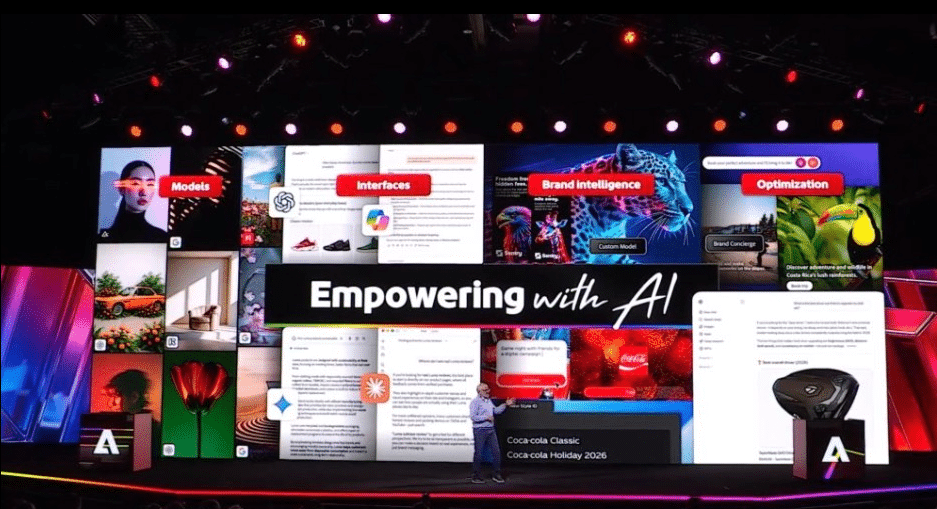
A major theme throughout Summit was that Adobe is no longer positioning AI as a distant possibility. This year’s focus was on practical, embedded AI tools that support real marketing work now.
One of the biggest announcements was Adobe CX Enterprise, an end-to-end agentic AI system designed to help manage the customer lifecycle. Closely tied to that was the introduction of CX Coworker, an AI-powered assistant built to support audience segmentation, creative asset development, performance analysis, editing, implementation, and reporting.
What stood out most was not just the scale of Adobe’s AI vision, but its usability. The focus centered on helping teams move faster across three critical areas:
- Content supply chain
- Customer engagement
- Brand visibility
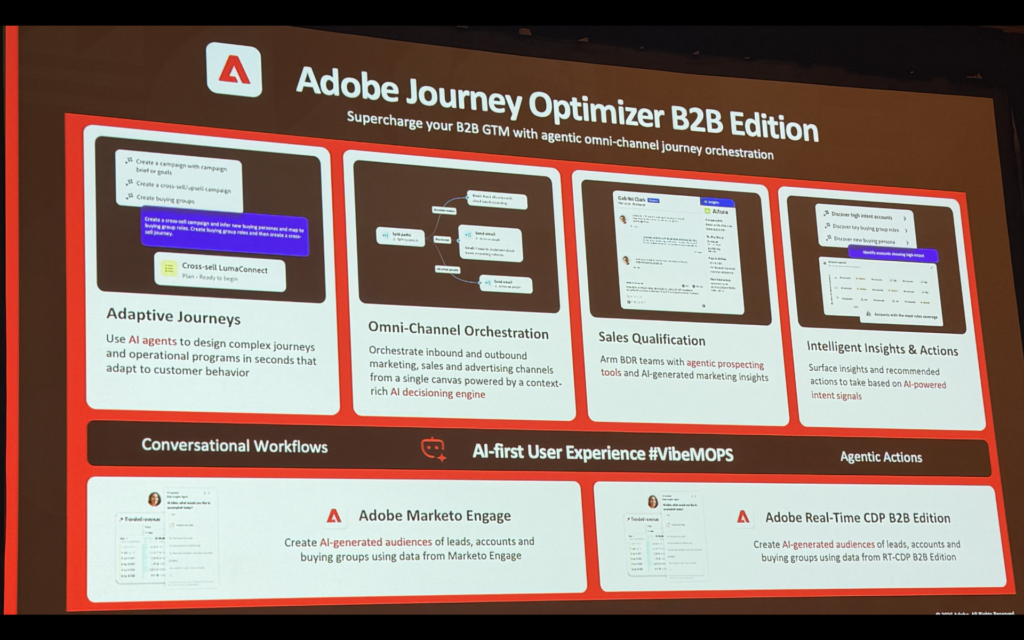
The Summit team also noted a stronger emphasis on Adobe Journey Optimizer, Business-to-Business edition (AJO B2B), signaling Adobe’s continued push toward more connected, journey-based orchestration across the B2B marketing ecosystem. It allows designing hyper-personalized journeys with the help of AI virtually in seconds.
The platform was positioned as a more modern, drag-and-drop environment for omnichannel orchestration, with Marketo continuing to power critical back-end marketing operations. What made AJO B2B especially noteworthy was the amount of attention Adobe gave it, suggesting it will play a larger role in how B2B marketers design and manage connected customer journeys going forward.
Marketo’s AI Evolution is Built for Efficiency
For anyone working in marketing operations, some of the most exciting updates came from Marketo. Several stood out as meaningful time-savers for enterprise teams:
- Interactive webinars with generative AI
- Image to HTML Converter
- GenAI for copy, image, and subject line generation
- Adobe Express integrations for quicker image edits
These updates matter because they reduce friction in day-to-day execution. Instead of switching between disconnected tools or rebuilding assets from scratch, marketers can increasingly work within a more unified environment. That is a big deal for operational teams. It means less time spent on manual production and more time focused on campaign quality, segmentation, testing, and performance.
One standout demo showed Marketo’s generative AI transforming a hand-drawn napkin sketch into a functional email template in minutes. The workflow was simple: upload the sketch, and Marketo builds the email structure directly from the drawing. It still requires human refinement, but the technology can take teams from idea to a highly developed prototype from a single image, dramatically accelerating the path from concept to execution.
The Rise of AI Agents in Marketing Operations
One of the most talked-about innovations was Marketo’s growing use of AI agents, including:
- Prebuilt Agents
- Callable Agents
- Model Context Protocol (MCP) Server
- Product Knowledge
Prebuilt agents offer a range of practical features. They can run quality assurance (QA) on a program, generate a downloadable QA report, and support lead imports by cleaning data, removing duplicates, and normalizing state and country values before records are brought in through the Import Leads agent. The current prebuilt agents are:
- QA Agent – Ensures program meets quality assurance and generates a QA report
- Import Leads Agent – Simplifies lead intake by cleaning data, removing duplicates, and normalizing values like country and state
Other features, such as the Lead Investigation Agent and Create Program Agent, are still in development. Once available, the Lead Investigation Agent will help marketers save time by surfacing activity history and answering questions such as why a lead did not become an MQL.
Callable Agents can be triggered directly within Smart Campaign workflows to automate tasks such as bot detection and data standardization, normalization, and enrichment. They can also automatically fix inconsistencies (for example, company names, job titles, and country codes) before a record is stored or routed to the CRM. This eliminates the need for manual cleanup or downstream fixes, reducing errors and preventing broken workflows.
What makes them especially valuable is that they bring AI execution into existing marketing operations processes, helping teams reduce manual work, improve data quality, and move faster without leaving Marketo.
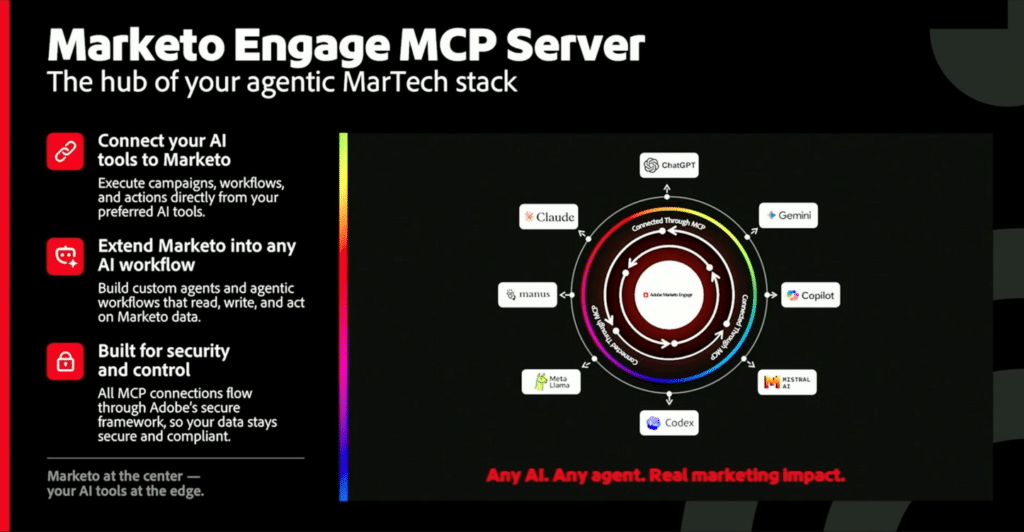
The MCP Server was another notable announcement. It is designed to connect Marketo with external AI tools such as ChatGPT, Claude, and others, opening the door for more connected AI workflows.
The Product Knowledge feature also impressed the team as an in-product coach that can provide step-by-step guidance backed by Adobe documentation.
Better Interfaces Support Better Adoption
Adobe’s evolving user experience, particularly within Marketo, introduced a modernized interface and redesigned email builder that make it easier for teams to create, edit, personalize, and QA assets with greater speed and efficiency. Adobe is listening to user feedback: improvements to HTML access, drag-and-drop editing, reusable fragments, and brand alignment checks suggest a more mature and practical product direction.
For brands managing complex campaigns across audiences and business units, usability matters. Better interfaces support faster adoption, fewer errors, and more scalable execution.
Beyond Marketo: Other Standout Summit Demos
While Marketo updates drew a lot of attention, there are several broader Adobe innovations worth watching.
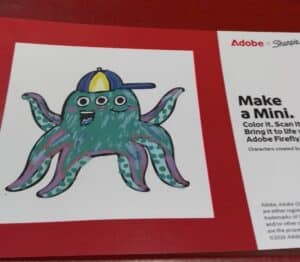
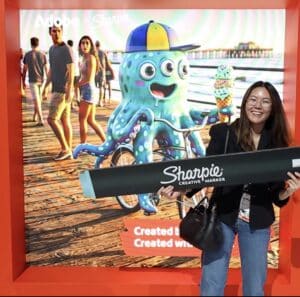
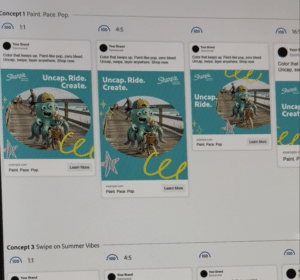
- Adobe Firefly + Sharpie: One hands-on session showed how Adobe Firefly can turn simple drawings into AI-generated content. The demo underscored how quickly rough ideas can become usable visual assets, social content, and design outputs.
- Brand Audit with Adobe: Adobe’s Digital Opportunities Portal can generate a brand performance report based on company name. For teams focused on visibility and digital maturity, this kind of audit functionality offers a useful shortcut to identifying opportunities.
- Adobe Pro and Express: Another standout area was the growing set of AI tools built into Adobe Pro and Adobe Express. Features like PDF spaces, AI Assistant, brand review, audience-specific summaries, and even podcast generation show how Adobe is embedding automation into tools marketers already use every day.
- Adobe Experience League: A practical resource for ongoing learning, especially its AI training content and Acrobat updates.
What This Means for Brands Right Now
Another important thread from Summit was Adobe’s view that the traditional marketing funnel is no longer as linear as it once was. Customers are increasingly using LLMs and AI tools to research vendors, compare solutions, and narrow consideration sets before ever arriving at a website. That means brands need to think beyond conventional funnel planning and begin preparing content, structure, and discoverability for an AI-shaped buyer journey.
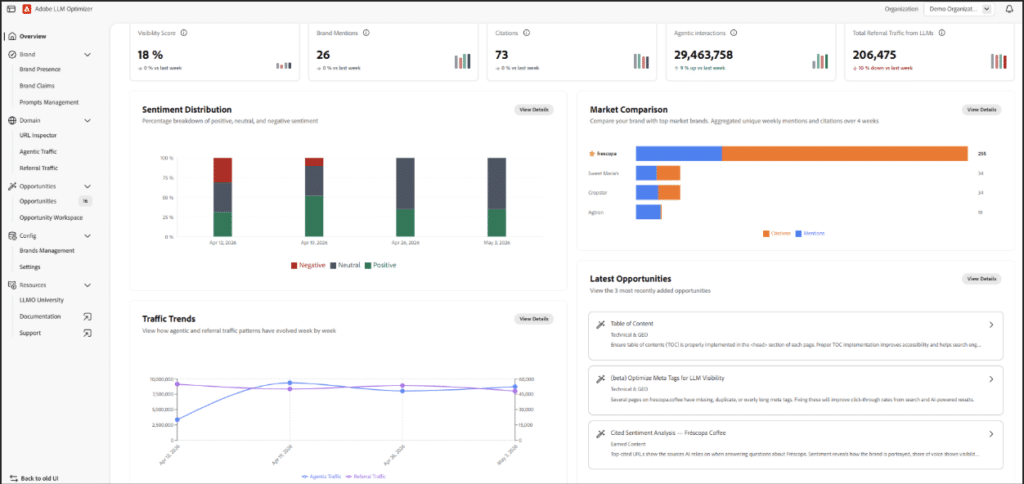
Adobe’s introduction of LLM Optimizer reinforced this shift. As AI-mediated discovery becomes more common, brands will need to think more strategically about how they appear in AI-generated answers and recommendation flows.
Top 10 Tips for Future Adobe Summit Attendees
Adobe Summit is always packed with learning opportunities, but it is also a lot to navigate. Here are a few of the most useful takeaways from the Mod Op team for anyone attending in the future:
- Arrive the day before. You’ll have time to get your badge, get oriented, and start the week with less stress.
- Plan your schedule early. Sessions fill up fast, so use the Summit app as soon as it opens.
- Block time for meals. If you don’t schedule lunch, the day will absolutely run away from you.
- Wear comfy shoes. This may be the most important tip of all. The attire is business casual and sneakers are completely acceptable. Your feet will thank you.
- Hydrate constantly. Conference air, hotel air, desert air — it all adds up. Bring a water bottle and refill whenever you can. There are plenty of refill stations throughout the conference.
- Take breaks. You do not need to make every single session.
- Find the meditation room or recharge spaces. When you’ve spent hours surrounded by thousands of people, a few quiet minutes can make a huge difference.
- Sit a few seats in. It’s a simple networking trick: people are more likely to sit next to you, which makes it easier to strike up conversations.
- If you’re getting certified, do it before the conference starts. That way you can spend the event focused on learning, networking, and having fun.
- Accept that you may get lost in The Venetian. Everyone does.
And yes, if the therapy dogs make a return, they are absolutely worth a visit.

Final takeaway
Adobe Summit 2026 made one thing clear: the future of marketing will be shaped by connected systems, stronger automation, practical AI, and a growing ability to identify data anomalies faster and more accurately. But success will still depend on the people guiding the strategy behind it all.
That is where Mod Op comes in. As an Adobe partner with Adobe Certified Masters – Marketo Engage Architects on our team, Mod Op helps clients turn marketing automation strategy into scalable, high-performing execution across all major marketing automation platforms and CRMs, including Adobe.

The Latest
We study the game as hard as we play it.
Learn with us what’s now and next.